When the chill of winter sets in, choosing the right space heater can be pivotal not just for comfort but for your electricity bill. Many homeowners find themselves weighing the pros and cons of oil-filled heaters against ceramic heaters, often with a primary focus on which option offers the best value. Both types provide supplemental warmth, but their operating principles, heating characteristics, and ultimately, their impact on your wallet, differ significantly. This guide will delve into these differences, helping you make an informed decision to optimize your heating strategy and save money.
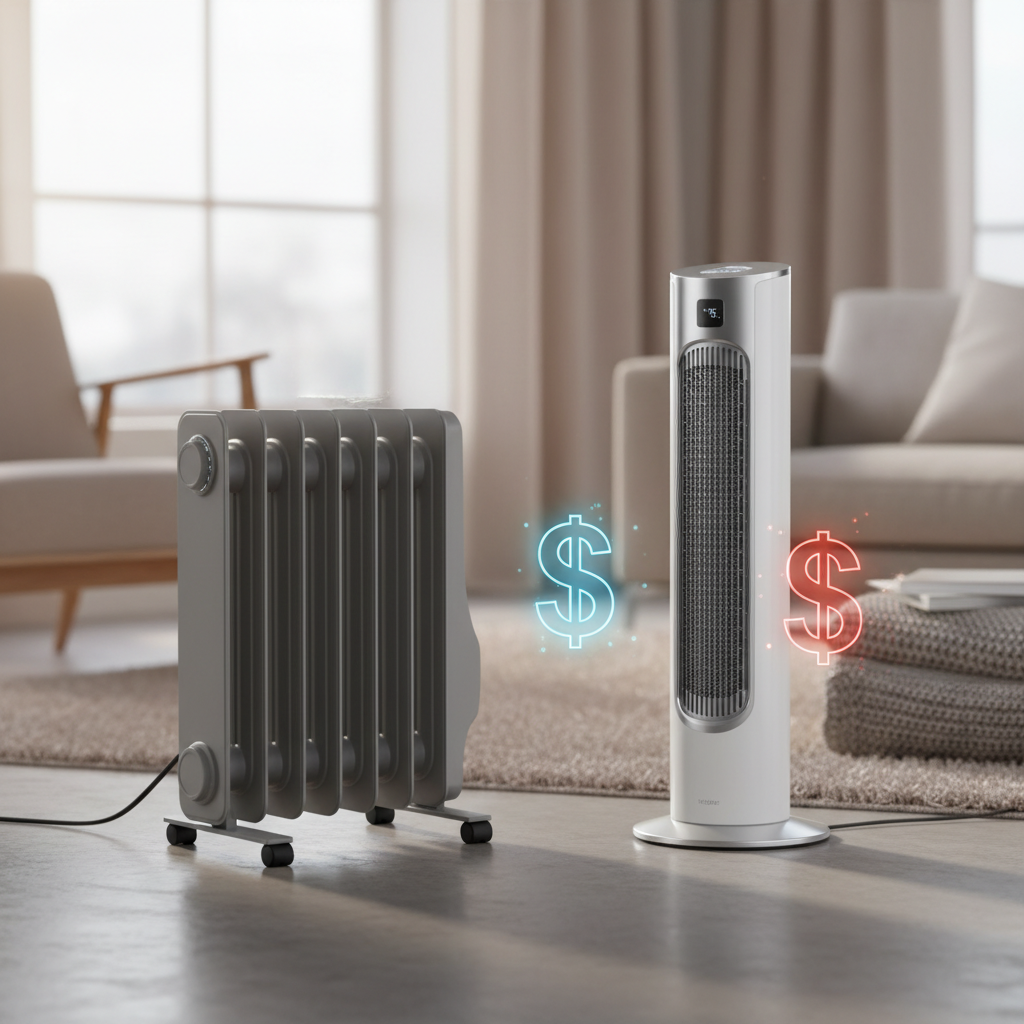
Understanding Oil-Filled Heaters: The Gentle, Lasting Warmth
Oil-filled heaters, often referred to as oil-filled radiators, are a classic choice for steady, consistent warmth. These heaters contain a sealed reservoir of diathermic oil, which is heated by an internal electrical element. The oil itself does not burn; it acts as a heat reservoir. As the oil warms, it transfers heat to the metal casing, which then radiates warmth into the surrounding air through convection and radiant heat. Since they don’t use a fan, the heat distribution is slow and gradual.
Advantages:
- Silent Operation: Without a fan, oil heaters operate almost silently, making them ideal for bedrooms, nurseries, or quiet office spaces.
- Sustained Heat Retention: Once heated, the oil retains warmth for an extended period, even after the electrical element cycles off. This thermal inertia means they continue to emit heat, contributing to energy efficiency over longer durations.
- Comfortable, Non-Drying Heat: They provide a gentle, even warmth that doesn’t dry out the air or stir up dust and allergens, making them a better choice for individuals with respiratory sensitivities.
- Energy-Efficient for Long-Term Use: Due to their heat retention, they cycle on and off less frequently to maintain a stable temperature, potentially leading to lower overall energy consumption during prolonged use.
- Low Maintenance: With no moving parts like fans, they typically require minimal maintenance beyond occasional dusting.
Disadvantages:
- Slow Warm-Up Time: Oil heaters take longer to reach their optimal operating temperature, often 10 to 30 minutes, so they don’t offer instant heat.
- Higher Initial Cost: Generally, oil-filled heaters have a higher upfront purchase price compared to ceramic models.
- Hot Surface Temperature: The metal fins can become very hot to the touch, posing a burn risk, especially in households with children or pets.
- Portability: They are typically heavier and bulkier, making them less convenient to move frequently between rooms.
Oil-filled heaters are best suited for maintaining a consistent, comfortable ambient temperature in medium to large rooms over several hours or overnight.
Understanding Ceramic Heaters: The Instant Warmth
Ceramic heaters utilize PTC (Positive Temperature Coefficient) ceramic plates or chips as their heating element. When electricity passes through these ceramic materials, they heat up rapidly. Most ceramic heaters also incorporate a fan that blows air across the hot ceramic plates, quickly distributing warmth through forced convection. The ceramic elements are self-regulating; their electrical resistance increases with temperature, preventing them from overheating.
Advantages:
- Rapid Heat-Up Time: Ceramic heaters deliver near-instantaneous warmth, often within seconds, providing immediate comfort.
- Portability: They are typically lightweight and compact, making them easy to move for spot heating wherever needed.
- Enhanced Safety Features: Many models come equipped with cool-touch exteriors, tip-over protection that automatically shuts off the unit if it’s knocked over, and overheat sensors, making them generally safer around children and pets.
- Lower Initial Purchase Price: Ceramic heaters are usually more affordable to buy upfront.
- Energy-Efficient for Short-Term Use: Their quick heating means less wasted energy on warm-up time, making them cost-effective for short, intermittent bursts of heat.
Disadvantages:
- Fan Noise: The built-in fan can produce a noticeable humming or whirring sound, which might be disruptive in quiet environments like bedrooms or offices.
- Limited Heat Retention: Once turned off, ceramic heaters lose their warmth quickly as there’s no thermal mass to retain heat. They need to run continuously to maintain a consistent temperature.
- Can Dry Air and Stir Dust: The fan-forced air can dry out the air and circulate dust and allergens, which might be a concern for allergy sufferers.
- Less Even Heating for Large Spaces: While effective for spot heating, they may struggle to heat larger rooms evenly for extended periods.
- Potentially Higher Long-Term Running Costs for Continuous Use: If used continuously for extended periods, they may consume more energy overall compared to an oil heater that cycles efficiently.
Ceramic heaters are excellent for providing quick, localized warmth in small to medium-sized rooms, personal workspaces, or for fast heating of a cold room before central heating takes over.
The Real Cost Comparison: Oil vs. Ceramic Heaters for Your Wallet
The question of which heater saves more money isn’t always straightforward, as it depends heavily on your specific heating needs and usage patterns. Both oil and ceramic heaters are electric resistance heaters, meaning they are nearly 100% efficient at converting electrical energy into heat at the source. The critical difference in cost-effectiveness lies in how they deliver and retain that heat.
Initial Purchase Price
- Ceramic Heaters: Generally more budget-friendly upfront, with prices often ranging from $25 to $80.
- Oil-Filled Heaters: Typically command a higher initial cost, often between $60 and $150, reflecting their more robust construction and thermal components.
|
Our Picks for the Best Oil filled radiator in 2026
As an Amazon Associate I earn from qualifying purchases.
|
||
| Num | Product | Action |
|---|---|---|
| 1 | PELONIS Radiator Heater for Large Space, Electric Oil Filled Radiator, Dual Knobs, 1500W, Quiet Space Heater, 3 Modes, Tip-over Protection |

|
| 2 | Pelonis Oil Filled Radiator Heater for Large Space, 2025 Upgraded, Space Heaters with 1500W Quiet Warmth Radiant Heater, 3 Heating Modes, Overheat & Tip-Over Protection, Adjustable Thermostat, White |
|
| 3 | PELONIS Oil Filled Radiator, Electric Space Heater for Indoor Use Large Room with Thermostat & Remote, 3 Modes & 3 Heat Settings, ECO Mode, 24H Timer, Quiet, Overheat & Tip-Over Protection, 1500W |
|
| 4 | Pelonis Oil Filled Radiator Heater for Large Space, 2025 Upgraded, Space Heaters with 1500W Quiet Warmth Radiant Heater, 3 Heating Modes, Overheat & Tip-Over Protection, Adjustable Thermostat, Black |
|
| 5 | Amazon Basics Portable Oil Space Heater with 7 Oil-Filled Fins, 3 Heat Settings, Adjustable Thermostat, Tip-Over and Overheat Protection, ETL Safety Certificate, 1500W, Black |
|
| 6 | PELONIS Radiator Heater for indoor use Large Room with Remote, Thermostat & LED Display, Quiet Oil Filled Heater with 5 Temperature Settings, Overheat & Tip-Over Protection, Silver |
|
| 7 | Amazon Basics Portable Oil Space Heater with Remote Control, 7 Oil-Filled Fins, Adjustable Thermostat, 3 Heat Settings, Tip-Over and Overheat Protection, ETL Safety Certificate, 1500W, Black |
|
| 8 | Amazon Basics Portable Oil Radiator Heater, Indoor Use, 3 Heat Settings, Over-Heat Protection, ETL-certified Safety, 7 Oil-Filled Steel Fins, 1500W, Tip-Over Protection, 11"D x 14.8"W x 25.2"H, White |
|
| 9 | DREO Oil Filled Radiator, Electric Radiant Heaters for indoor use Large Room with Remote Control, Child Lock, 4 Modes, Overheat & Tip-Over Protection, 24h Timer, Digital Thermostat, Quiet, 1500W |
|
| 10 | PELONIS Radiator Heater for Large Space, Electric Oil Filled Radiator, Dual Knobs, 1500W, Quiet Space Heater, 3 Modes, Tip-over Protection |
|
If your primary concern is the immediate outlay, a ceramic heater will usually be the cheaper option.
Energy Consumption and Running Costs
This is where usage duration truly matters.
-
For Short-Term Heating (1-3 hours):
Ceramic heaters are overwhelmingly advantageous. They provide immediate heat with no warm-up waste. You feel the warmth within moments, and you can turn it off as soon as you’re comfortable. This makes them highly economical for quick bursts of heat in a chilly room, such as a bathroom in the morning or a home office for a couple of hours. “For quick warmth in a small space, the ceramic heater’s instant heat delivery translates directly into lower energy waste,” states an expert in home appliances. -
For Long-Term Heating (3+ hours, overnight):
Oil-filled heaters often pull ahead in cost-effectiveness. While they consume more power during their initial heat-up phase, once the oil reaches the target temperature, the thermostat cycles the unit on and off to maintain warmth. The stored heat in the oil continues to radiate during the “off” cycles, meaning the heater doesn’t need to run continuously. This ability to retain and slowly release heat can result in lower overall energy consumption for sustained heating, such as keeping a bedroom warm overnight or a living room cozy for an entire evening.“Many believe that continuous heat means continuous high energy use, but with oil-filled radiators, their thermal mass allows for more efficient cycling, often translating to lower monthly bills for extended operation,” explains a seasoned HVAC technician.
For example, for a 1500W heater used 5 hours daily at an electricity rate of $0.13/kWh, a ceramic heater might cost around $30/month, while an oil heater, utilizing its efficient cycling, could potentially run $25-$28/month. These figures can vary significantly based on insulation, room size, and ambient temperature.
Lifespan and Maintenance Costs
- Oil-Filled Heaters: Their simpler, fan-less design with fewer moving parts often contributes to a longer lifespan and lower maintenance requirements. No fans mean no dust buildup that needs regular cleaning, and no fan motors to wear out.
- Ceramic Heaters: While generally durable, their fans may accumulate dust over time, requiring periodic cleaning to maintain efficiency. In some cases, fan motors might need replacement over the unit’s lifespan.
Over the long haul, an oil heater might incur fewer maintenance-related expenses, adding to its overall cost-effectiveness.
Beyond the Budget: Performance, Safety, and Comfort
While cost is a significant factor, comfort and safety are equally important when choosing a heater.
Heat Distribution and Comfort
- Oil Heaters: Deliver a gentle, radiant heat that slowly and evenly permeates the room, creating a comfortable, consistent warmth. They do not blow air, which means they don’t circulate dust or dry out the air.
- Ceramic Heaters: Primarily use forced convection, distributing warm air quickly. The direct airflow can make you feel warm faster but may also create drafts, potentially dry the air, and stir up dust.
Speed of Heating
- Ceramic Heaters: Offer immediate warmth, perfect for quickly alleviating a cold spot or warming a room you’ve just entered.
- Oil Heaters: Take time to heat up, but once warm, they maintain a stable temperature more consistently.
Noise Level
- Oil Heaters: Are virtually silent, disturbed only by an occasional soft click as the thermostat cycles. This makes them ideal for noise-sensitive environments.
- Ceramic Heaters: Produce a continuous low hum from their fan, which, while often mild, can be a distraction for some users, especially in quiet settings.
Safety Features and Surface Temperature
- Ceramic Heaters: Are often designed with cool-touch exteriors, making them safer to handle and less of a burn risk. They almost always include tip-over switches and overheat protection.
- Oil Heaters: While modern oil heaters also feature overheat and tilt protection, their metal surfaces, especially the fins, can become quite hot, requiring careful placement away from flammable materials and curious hands or paws.
Portability and Room Suitability
- Ceramic Heaters: Lightweight and compact, they are the champions of portability, easily moved from room to room for targeted spot heating in small to medium spaces.
- Oil Heaters: Their size and weight make them less portable, better suited for a fixed location in medium to large rooms where sustained ambient heat is desired.
Choosing the Right Heater for Your Needs: A Practical Buying Guide
Selecting between an oil-filled heater and a ceramic heater boils down to understanding your specific heating requirements.
-
Assess Your Room Size and Usage:
- For small to medium rooms or spot heating where you need quick warmth for short periods (e.g., a home office for a few hours, a cold bathroom), a ceramic heater is usually the more efficient and effective choice.
- For medium to large rooms where you need to maintain consistent, long-lasting warmth over many hours or overnight (e.g., a bedroom, living room), an oil-filled heater will likely be more cost-effective and comfortable.
-
Consider Your Budget:
- If upfront cost is your main concern, ceramic heaters are generally cheaper to purchase.
- If you’re focused on long-term running costs for sustained heating, an oil heater’s thermal inertia can offer savings.
-
Prioritize Safety and Comfort:
- For households with children or pets, or if you prioritize cool-touch surfaces, a ceramic heater with its advanced safety features might be preferable.
- If silent operation and gentle, non-drying heat are paramount, especially in sleeping areas or for allergy sufferers, an oil-filled heater is the superior option.
-
Think About Portability:
- If you plan to move the heater frequently, a lightweight ceramic heater is the practical choice.
- If the heater will remain in a largely fixed position, an oil-filled heater’s weight is less of a concern.
Maximizing Efficiency and Longevity: Usage and Maintenance Tips
Regardless of your choice, proper usage and maintenance can significantly extend your heater’s lifespan and ensure optimal efficiency.
Usage Tips:
- Strategic Placement: Position your heater in the coldest part of the room, but away from walls, furniture, or curtains to allow for proper heat circulation and prevent fire hazards.
- Thermostat Control: Utilize the thermostat to set your desired temperature. Both types of heaters will then cycle on and off to maintain it, conserving energy.
- Avoid Overheating: Don’t set the temperature excessively high; aim for comfortable warmth.
- Zone Heating: Use your space heater to warm the room you’re in, rather than increasing the thermostat for your entire home.
Maintenance Tips:
- Regular Cleaning: For ceramic heaters, frequently dust the air intake and output vents to prevent buildup that can reduce efficiency and potentially become a fire hazard. For oil heaters, simply wipe down the external surfaces with a damp cloth when cool.
- Inspect Cords: Periodically check power cords for any fraying or damage and replace immediately if found.
- Safe Storage: Store your heater in a dry, safe place during off-seasons, ideally in its original packaging.
Common Misconceptions and Troubleshooting
There are a few common misunderstandings about these heaters:
- “One type is universally more efficient.” As explored, both are 100% efficient at converting electricity to heat, but their energy consumption over time varies with usage duration. The “more efficient” heater is the one that best suits your specific heating pattern.
- Oil Leakage in Oil Heaters: Oil-filled heaters are permanently sealed units; the oil is not a fuel and should never leak. If you notice any fluid, the unit is faulty and should be immediately disconnected and serviced by a professional.
- Ceramic Heaters Drying Out Air: While any direct heating can slightly reduce humidity, the fan in ceramic heaters can give a perception of drier air. If this is a concern, pairing it with a small humidifier can help.
Conclusion
Choosing between an oil heater and a ceramic heater ultimately comes down to a careful balance of your heating needs, desired comfort, and how you define “saving money”—whether it’s on the initial purchase or long-term running costs. Ceramic heaters excel in providing rapid, portable warmth for short durations and smaller spaces, often with a lower upfront investment and advanced safety features. Oil-filled heaters, conversely, offer silent, sustained, and gentle heat, proving more cost-effective for prolonged use in larger areas due to their impressive heat retention.
By considering your room size, how long you need the heat, your sensitivity to noise, and safety priorities, you can make the decision that keeps your home cozy and your energy bills in check. What aspect of your home heating are you most eager to optimize this winter?
