Stepping out of a warm shower into a cold bathroom is a jarring experience, especially when met with a damp, chilly towel. Imagine instead wrapping yourself in a perfectly warmed, dry towel every time, while also enjoying a subtle, comforting warmth throughout your bathroom. This luxurious reality is made possible by oil-filled electric towel radiators, a versatile appliance that blends the efficient heating properties of an oil-filled unit with the practical design of a towel drying rack. These units are a simple yet significant upgrade, offering both unparalleled comfort and a touch of spa-like indulgence to your daily routine.
What Are Oil Filled Radiators with Towel Drying Racks?
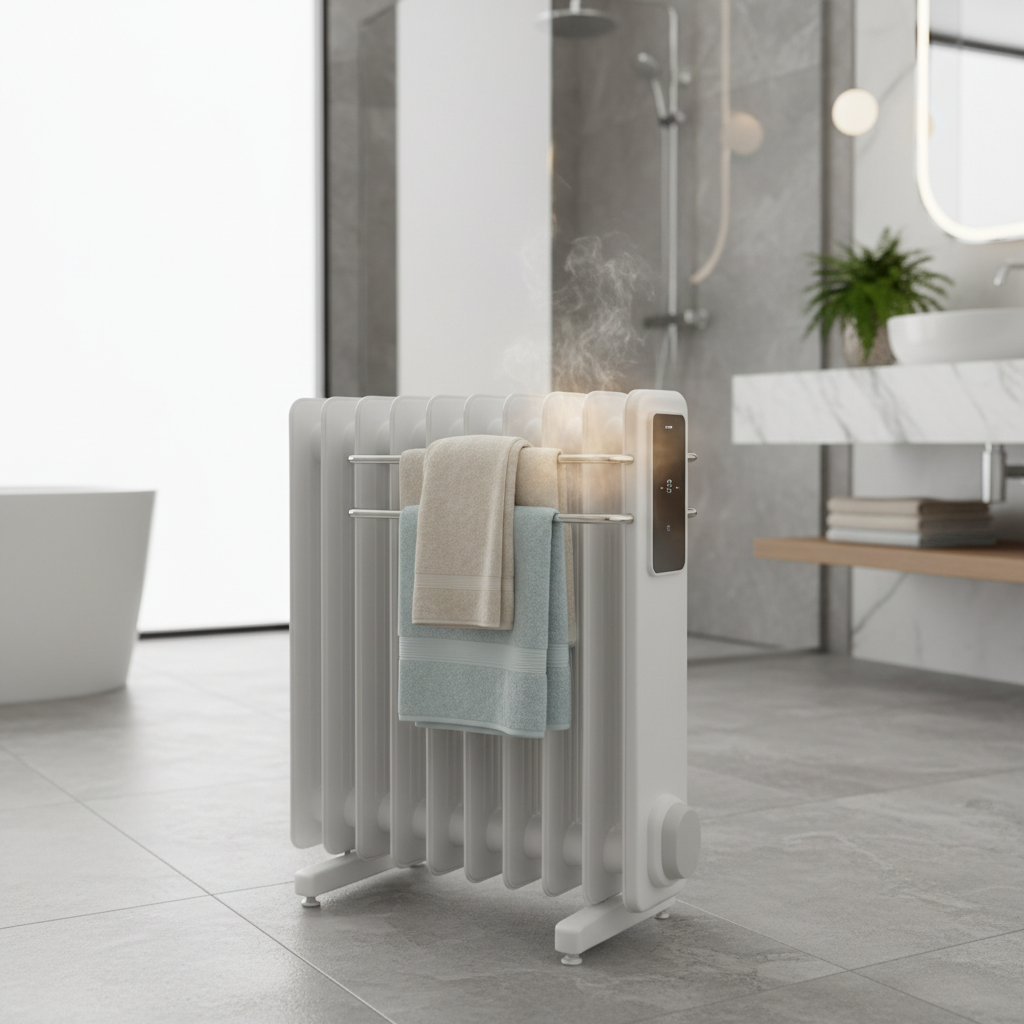
When discussing “oil filled radiators with towel drying racks,” it’s crucial to clarify that these are typically oil-filled electric towel rails or thermal fluid towel warmers, rather than traditional portable oil-filled space heaters. While conventional oil-filled radiators excel at providing sustained ambient heat, they do not inherently include towel drying capabilities. The products you’re likely seeking are specifically designed heated towel rails that utilize a thermal fluid, often an engineered oil, within their bars.
The core principle behind these innovative devices involves an internal electric heating element that warms a specially formulated thermal fluid sealed within the unit. This heated fluid then circulates through the bars of the rail, radiating warmth outwards to both dry towels and provide a gentle source of heat to the room.
How They Work and Their Advantages
Oil-filled electric towel rails stand out due to their superior heat retention. While they may take slightly longer to reach their peak temperature compared to dry thermal towel rails, the thermal fluid inside ensures they continue to emit warmth even after the power is switched off. This sustained heat makes them an excellent choice for consistent comfort and can contribute significantly to warming a bathroom.
Advantages of Oil-Filled Electric Towel Rails:
- Superior Heat Retention: The thermal fluid holds heat efficiently, providing prolonged warmth.
- Even Heat Distribution: The fluid ensures warmth is spread consistently across all bars, eliminating cold spots on towels.
- Secondary Room Heating: Many models are powerful enough to take the chill out of a bathroom, with larger wattages potentially serving as a primary heat source in smaller, well-insulated spaces.
- Energy Efficiency: Operating independently from central heating, they can be precisely controlled with thermostats and timers, reducing overall energy consumption by heating only when and where needed.
- Safety: Designed for bathroom use with appropriate IP (Ingress Protection) ratings (IPX4 or higher) for splash protection, and often include thermal safety limiters to prevent overheating. The thermal fluid is safely contained and requires no top-up.
- Low Maintenance: These are sealed, self-contained units that don’t require bleeding or annual servicing like central heating systems.
- Durability and Repairability: The heating element is often replaceable, extending the lifespan of the unit.
|
Our Picks for the Best Oil filled radiator in 2026
As an Amazon Associate I earn from qualifying purchases.
|
||
| Num | Product | Action |
|---|---|---|
| 1 | DREO Oil Filled Radiator, Electric Radiant Heaters for indoor use Large Room with Remote Control, Child Lock, 4 Modes, Overheat & Tip-Over Protection, 24h Timer, Digital Thermostat, Quiet, 1500W |

|
| 2 | PELONIS Radiator Heater for Large Space, Electric Oil Filled Radiator, Dual Knobs, 1500W, Quiet Space Heater, 3 Modes, Tip-over Protection |
|
| 3 | PELONIS Radiator Heater for indoor use Large Room with Remote, Thermostat & LED Display, Quiet Oil Filled Heater with 5 Temperature Settings, Overheat & Tip-Over Protection, Silver |
|
| 4 | PELONIS Oil Filled Radiator, Electric Space Heater for Indoor Use Large Room with Thermostat & Remote, 3 Modes & 3 Heat Settings, ECO Mode, 24H Timer, Quiet, Overheat & Tip-Over Protection, 1500W |
|
| 5 | PELONIS Radiator Heater for Large Space, Electric Oil Filled Radiator, Dual Knobs, 1500W, Quiet Space Heater, 3 Modes, Tip-over Protection |
|
| 6 | Pelonis Oil Filled Radiator Heater for Large Space, 2025 Upgraded, Space Heaters with 1500W Quiet Warmth Radiant Heater, 3 Heating Modes, Overheat & Tip-Over Protection, Adjustable Thermostat, Black |
|
| 7 | Amazon Basics Portable Oil Radiator Heater, Indoor Use, 3 Heat Settings, Over-Heat Protection, ETL-certified Safety, 7 Oil-Filled Steel Fins, 1500W, Tip-Over Protection, 11"D x 14.8"W x 25.2"H, White |
|
| 8 | Pelonis Oil Filled Radiator Heater for Large Space, 2025 Upgraded, Space Heaters with 1500W Quiet Warmth Radiant Heater, 3 Heating Modes, Overheat & Tip-Over Protection, Adjustable Thermostat, White |
|
| 9 | Amazon Basics Portable Oil Space Heater with 7 Oil-Filled Fins, 3 Heat Settings, Adjustable Thermostat, Tip-Over and Overheat Protection, ETL Safety Certificate, 1500W, Black |
|
| 10 | Amazon Basics Portable Oil Space Heater with Remote Control, 7 Oil-Filled Fins, Adjustable Thermostat, 3 Heat Settings, Tip-Over and Overheat Protection, ETL Safety Certificate, 1500W, Black |
|
Comparison to Dry Thermal Towel Rails:
| Feature | Oil-Filled (Thermal Fluid) Towel Rails | Dry Thermal Towel Rails |
|---|---|---|
| Heat-up Time | Slower (30-45 minutes) | Faster (around 15 minutes) |
| Heat Retention | Excellent; retains warmth after switch-off | Less; cools down quickly |
| Heat Distribution | Even and consistent across all bars | May have hotter spots, less uniform |
| Room Heating | Can contribute significantly to ambient room warmth | Primarily for towel warming, less room heating |
| Repairability | Heating element often replaceable | Often cannot be repaired if wiring fails |
Types of Oil-Filled Electric Towel Rails
Oil-filled electric towel rails come in a variety of configurations, each designed to meet different aesthetic and functional needs. Understanding these variations can help you select the perfect model for your home.
Classification by Wattage and Heat Output
The wattage of an oil-filled towel rail dictates its heat output and, consequently, its ability to warm both towels and the surrounding room.
- Lower Wattage (e.g., 150W-300W): Primarily designed for warming and drying towels. These are energy-efficient for their main purpose and provide a subtle ambient warmth.
- Medium Wattage (e.g., 300W-600W): Offers effective towel drying and can act as a reliable secondary heat source for most bathrooms, taking the chill out of the air.
- Higher Wattage (e.g., 600W+): Suitable for larger bathrooms or for those who wish for the towel rail to serve as the primary heating source in a well-insulated small bathroom.
Classification by Design and Number of Bars
The physical design of the towel rail significantly impacts its drying capacity and aesthetic appeal.
- Ladder Design: The most common style, featuring horizontal bars resembling a ladder. The number of bars dictates how many towels can be hung and how efficiently they will dry. More bars generally mean more surface area for heat transfer and drying.
- Designer Aesthetics: Modern designs include staggered rectangular bars or angular “cube” shapes, offering a contemporary look that can serve as a style statement in your bathroom.
- Vertical vs. Horizontal: Most towel rails are vertical to save wall space, but horizontal options exist.
Classification by Features
Modern oil-filled electric towel rails are equipped with various features to enhance convenience, energy efficiency, and control.
- Thermostatic Control: Allows users to set a desired temperature, with the unit automatically adjusting its heat output to maintain it.
- Programmable Timers: Essential for energy saving, timers enable you to schedule operation, ensuring warm towels are ready when needed and avoiding continuous, unnecessary heating.
- Wi-Fi and Bluetooth Control: Advanced models can be controlled remotely via smartphone apps, offering comprehensive programming and the ability to manage heating from anywhere.
- Open Window Detection: Some smart models can detect sudden drops in temperature (e.g., an open window) and temporarily pause heating to prevent energy waste.
- Eco and Anti-Frost Modes: Specific settings to optimize energy consumption or protect against freezing in colder conditions.
- Finishes: Available in a wide range of finishes such as polished chrome, matte black, anthracite grey, brushed brass, and stainless steel to complement any bathroom decor.
Top Oil-Filled Electric Towel Rails for Your Home
Several brands offer high-quality oil-filled electric towel rails that excel in both functionality and design. Here’s a comparison of some notable models, highlighting their key features and suitability:
| Model | Key Features | Control Options | Heat Output (Typical) | Design Style | Notable Advantages |
|---|---|---|---|---|---|
| Ecostrad Fina-E | IP55 Rating, Straight Rung Ladder Design, Heat Retentive Thermal Oil, 5-Year Warranty | WiFi, Bluetooth, Thermostatic, Basic On/Off | Varies by size | Simple, Elegant Ladder | Versatile control, suitable for kitchens/bathrooms |
| Ecostrad Cube | 100% efficient, Open Window Detection, Comfort/Eco/Anti-Frost Modes, IPX4 Rating | WiFi, Bluetooth, Thermostatic | 400W, 600W | Boxy, Angular, Modern | Advanced control, energy-saving features |
| Terma Quadrus Bold ONE | Staggered Rectangular Bars, Pre-filled Thermodynamic Oil, 8-Year Warranty | Push-button (2 temp settings: 45°C, 60°C), 2-Hr Timer | Varies by size | Statement-making, Futuristic | Designer aesthetic, straightforward operation |
| Amba Jeeves Collections | Glycol-water solution, replaceable heating element, various sizes (e.g., C Straight, D) | Often requires external switch/timer | Varies by size | Classic to Modern | High repairability, range of sizes for multiple towels |
| Runtal Omnipanel | Known for significant radiant heat output | Varies by model (often with external controls) | Up to 2000 BTUs | Panel-style | Can serve as a primary heat source for bathrooms |
“The advancement in thermal fluid technology has made oil-filled electric towel rails a smart investment, offering sustained warmth and high efficiency in a stylish package.” – Ibrahim Kalay, Founder, Elegant Radiators
How to Choose the Right Oil-Filled Electric Towel Rail (Buying Guide)
Selecting the best oil-filled electric towel rail requires considering several factors to ensure it meets your specific needs for warmth, drying, and aesthetics.
1. Determine Your Usage Needs
- Room Size and Primary/Secondary Heating: For small, well-insulated bathrooms or en-suites where it will be the primary heat source, opt for a higher wattage model (e.g., 400W+). For larger bathrooms or as a secondary heat source to supplement existing heating, a mid-range wattage is usually sufficient. For simply warming towels, a smaller model will suffice.
- Number of Towels: Consider how many towels you typically need to dry simultaneously. Models with more bars or larger dimensions are better suited for multiple towels or bath sheets.
- Installation Location: While typically found in bathrooms, these versatile units can also be beneficial in laundry rooms, mudrooms, or pool houses.
2. Choose the Right Wattage and Size
Use an online BTU calculator or consult manufacturer recommendations based on your room’s dimensions, insulation, and the presence of windows. A general rule of thumb is to calculate the heat output required per cubic foot of room space.
3. Prioritize Safety Features
- IP Rating: Ensure the unit has an appropriate IP (Ingress Protection) rating for bathroom zones, typically IPX4 or higher, indicating protection against water splashes.
- Overheat Protection: Look for models with built-in thermal safety limiters that cut power if the temperature rises too high.
- Installation Type: Hard-wired installations by a qualified electrician are generally safer and provide a cleaner aesthetic with no visible cords. Plug-in models offer flexibility but require a suitably located outlet away from water sources.
4. Evaluate Control Options
- Basic vs. Smart: Decide whether a simple on/off switch, a basic thermostat, or advanced programmable timers and Wi-Fi/Bluetooth app control (for remote management and energy efficiency features like open window detection) best suits your lifestyle.
5. Consider Material and Finish
- Durability and Aesthetics: Stainless steel is highly recommended for its excellent heat conductivity and rust resistance. Mild steel is a common, effective, and often more affordable option when combined with durable finishes like chrome or powder coating. Finishes like polished chrome, matte black, anthracite, or brushed brass offer diverse aesthetic choices.
6. Compare Price and Warranty
Investment in a good quality oil-filled electric towel rail can range significantly. While budget-friendly options exist, mid-to-high range models often offer better materials, advanced features, and longer warranties (e.g., 5-8 years on the body). Consider the long-term value, including repairability of components like heating elements.
How to Use and Maintain Your Oil-Filled Electric Towel Rail Safely and Efficiently
To ensure your oil-filled electric towel rail operates effectively, safely, and lasts for years, proper usage and maintenance are key.
Safe Usage Guidelines
- Avoid Overloading: While designed for towels, do not drape heavy, soaking wet items like jeans or excessive numbers of towels that completely cover the unit. This can impede heat circulation, reduce drying efficiency, and potentially create a fire hazard.
- Proper Placement: Ensure the towel rail is installed in a bathroom zone that complies with electrical regulations, away from direct splashes from a shower or bath, unless it has a sufficient IP rating for closer proximity. Maintain clear space around the unit for optimal heat distribution.
- Children and Pets: Be mindful that the bars can become hot. If you have young children or pets, consider models with lower surface temperatures or ensure it’s installed out of their reach.
- No Chemicals: Never use harsh chemical cleaners on the surface, as they can damage the finish.
- Not for Drying Clothes: While some small items like socks or underwear can be dried, these units are primarily for towels and should not replace a clothes dryer.
Maximizing Efficiency
- Utilize Timers and Thermostats: Program your towel rail to switch on an hour or two before your shower and turn off a while after to dry the towel. This prevents continuous, unnecessary energy consumption. Use the thermostat to maintain a comfortable temperature without overheating.
- Zone Heating: Since electric towel rails operate independently, you can heat your bathroom without turning on your entire central heating system, making them highly efficient for year-round use, especially in warmer months.
- Insulation: A well-insulated bathroom will significantly improve the efficiency of your towel rail as a heat source, helping it maintain warmth for longer.
Cleaning and Care
- Regular Dusting: Electric towel rails are virtually maintenance-free, but a regular wipe-down with a soft, dry or slightly damp cloth will keep them clean and looking their best.
- Check for Obstructions: Periodically ensure no curtains, furniture, or other items are blocking the towel rail, as this can hinder its performance and thermostat function.
Common Issues and Troubleshooting
While oil-filled electric towel rails are generally reliable, you might encounter a few common issues. Most can be resolved with simple troubleshooting.
- Unit Not Heating Up:
- Check Power: Ensure the unit is properly plugged in (for plug-in models) or that the circuit breaker hasn’t tripped (for hard-wired models).
- Thermostat Settings: Verify that the thermostat is set to a temperature above the current room temperature.
- Timer Settings: If using a timer, confirm it’s programmed correctly and the unit is scheduled to be on.
- Heating Element: In rare cases, the heating element might fail. This is typically a repairable component in oil-filled models.
- Uneven Heating:
- Overloading: Too many towels or heavy items can create cold spots by blocking heat distribution. Reduce the load.
- Airlocks: While rare in sealed units, an improperly filled unit (if it wasn’t pre-filled) could have airlocks causing uneven heat. Professional inspection might be needed.
- Unit Making Unusual Noises:
- Expansion/Contraction: Minor creaking or pinging sounds are normal as the metal heats and cools.
- Bubbling/Gurgling: If excessively loud, it might indicate air within the thermal fluid, which should ideally be addressed by a professional if not a pre-filled unit.
- Leaks:
- Oil-filled units are sealed and rarely leak. If a leak occurs, it indicates a fault and should be immediately disconnected from power and inspected by a qualified professional.
- When to Call a Professional:
- Always contact a qualified electrician for any hard-wired installation or if you suspect an electrical fault.
- If the unit consistently fails to heat, shows signs of damage, or experiences a leak, a professional should be consulted. Some manufacturers, like Amba, offer replacement heating elements, which can be a straightforward repair.
Conclusion
The pursuit of bathroom comfort and hygiene finds an ideal solution in oil-filled electric towel radiators. These versatile units go beyond simply warming towels, offering a blend of steady, radiant heat, energy efficiency, and modern design that elevates any bathroom space. With their superior heat retention, independent operation, and range of smart controls, they provide both the luxury of a warm, dry towel and a comforting ambient temperature, all while being a safe and low-maintenance addition to your home. By considering your specific needs for wattage, design, and smart features, you can easily find an oil-filled electric towel rail that transforms your daily routine into a spa-like experience. Are you ready to embrace the ultimate bathroom upgrade?
Frequently Asked Questions
Are oil-filled electric towel radiators expensive to run?
They are surprisingly cost-effective, especially when used with programmable timers and thermostats. Since they operate independently from your main heating system, you only use electricity for that specific appliance for short, targeted periods, consuming far less energy than heating your entire house.
Can an oil-filled electric towel radiator heat my bathroom effectively?
Yes, most models can act as an excellent secondary heat source to take the chill out of a bathroom. Higher wattage models (e.g., 400W+) can even serve as the primary heat source for a small, well-insulated bathroom or en-suite, particularly models from brands like Runtal.
What’s the difference between oil-filled and dry electric towel rails?
Oil-filled (thermal fluid) models heat up slower but retain warmth for longer, providing more consistent and prolonged heat, and contribute more to room heating. Dry element models heat up quickly but also cool down faster and are primarily designed for rapid towel warming.
Are these towel radiators safe for use in bathrooms?
Absolutely. They are specifically designed for bathroom environments and carry an IP (Ingress Protection) rating, typically IPX4 or higher, confirming their protection against water splashes. Proper installation by a qualified electrician for hard-wired models ensures safety and compliance with electrical regulations.
How long do oil-filled electric towel radiators typically last?
A high-quality, professionally installed oil-filled electric towel radiator can last for many years, often between 10 to 15 years or even longer. Their heating elements are durable, and unlike central heating, they are sealed, maintenance-free units.
Can I install an oil-filled electric towel radiator myself?
If you choose a “plug-in” model, you can typically mount it and plug it into a suitable outlet. However, for a “hard-wired” installation, which offers a cleaner, more permanent, and generally safer finish in a bathroom, you must use a qualified electrician to comply with electrical regulations.