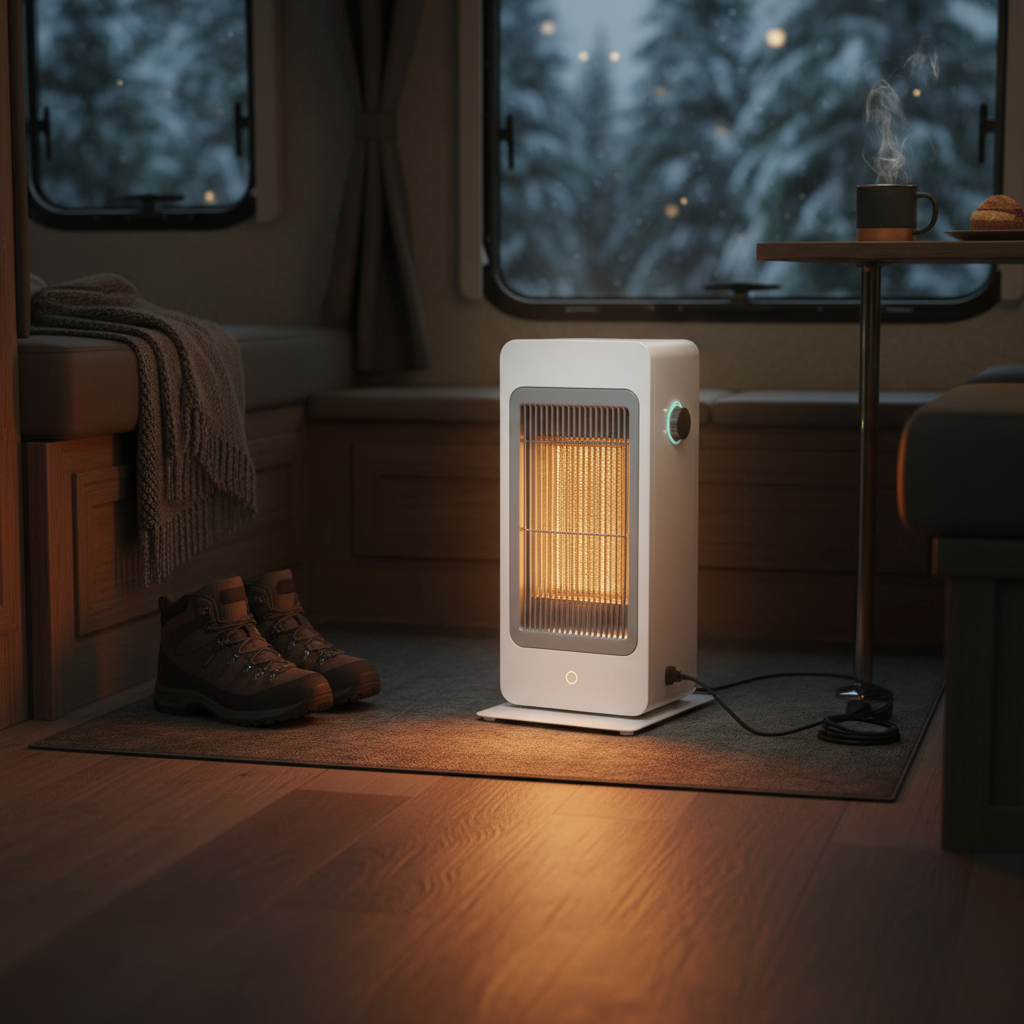
The allure of the open road and the tranquility of nature often come with a chilly caveat: cold nights in your RV or campsite. While built-in furnaces offer warmth, they can be noisy, consume significant propane, and sometimes, you just need a supplementary, quiet heat source. This is where portable oil-filled heaters emerge as a prime choice for RVers and campers seeking a blend of safety, efficiency, and silent operation to transform their mobile abode into a cozy retreat.
What Are Portable Oil Heaters and Why Are They Ideal for RVs and Camping?
Portable oil-filled heaters, also known as oil-filled radiators, operate by heating diathermic oil permanently sealed within a metal casing. An electric heating element warms the oil, which then circulates throughout the fins of the unit, radiating a consistent and gentle heat into the surrounding space. Unlike fan-forced heaters, they don’t blow hot air, meaning they operate silently and don’t dry out the air, creating a more comfortable environment.
For RVs and camping, these heaters offer distinct advantages:
- Silent Operation: Without a fan, oil-filled heaters are virtually silent, ensuring peaceful nights and undisturbed enjoyment of your surroundings.
- Consistent, Lasting Heat: Once warmed, the oil retains heat for an extended period, even after the unit cycles off, providing a steady and even warmth that permeates the space.
- Enhanced Safety: With no exposed heating elements or open flames, oil-filled heaters are considered one of the safest electric heating options for enclosed spaces like RVs. They don’t produce carbon monoxide or other fumes, a critical safety factor compared to combustion heaters.
- Doesn’t Dry the Air: The radiant heat provided helps maintain comfortable humidity levels, preventing the dry air often associated with other heating methods.
However, they do have a couple of considerations: they are generally slower to heat up initially compared to fan heaters and can be heavier or bulkier depending on the model.
Navigating the Options: Types of Portable Oil Heaters for Mobile Lifestyles
When selecting an oil-filled heater for your RV or camping adventures, understanding the different types can help you make an informed decision based on your specific needs.
Classification by Wattage (Power Consumption)
Wattage is a crucial factor for RVers, as campsite electrical hookups (EHU) often have amperage limitations (e.g., 10A or 16A circuits). Overloading a circuit can trip breakers, leaving you without power.
- Low Wattage (500W-800W): These compact units are excellent for smaller RVs, campervans, or when boondocking with limited power. They are less likely to trip a campsite’s EHU and are often highly energy-efficient.
- Higher Wattage (1000W-1500W): More powerful options are suitable for larger RVs or when you have a robust shore power connection that can handle the demand. Some models offer dual power settings, allowing you to switch between lower and higher wattages to match your power source.
|
Our Picks for the Best Oil filled radiator in 2026
As an Amazon Associate I earn from qualifying purchases.
|
||
| Num | Product | Action |
|---|---|---|
| 1 | PELONIS Oil Filled Radiator, Electric Space Heater for Indoor Use Large Room with Thermostat & Remote, 3 Modes & 3 Heat Settings, ECO Mode, 24H Timer, Quiet, Overheat & Tip-Over Protection, 1500W |

|
| 2 | Amazon Basics Portable Oil Space Heater with Remote Control, 7 Oil-Filled Fins, Adjustable Thermostat, 3 Heat Settings, Tip-Over and Overheat Protection, ETL Safety Certificate, 1500W, Black |
|
| 3 | DREO Oil Filled Radiator, Electric Radiant Heaters for indoor use Large Room with Remote Control, Child Lock, 4 Modes, Overheat & Tip-Over Protection, 24h Timer, Digital Thermostat, Quiet, 1500W |
|
| 4 | PELONIS Radiator Heater for Large Space, Electric Oil Filled Radiator, Dual Knobs, 1500W, Quiet Space Heater, 3 Modes, Tip-over Protection |
|
| 5 | PELONIS Radiator Heater for Large Space, Electric Oil Filled Radiator, Dual Knobs, 1500W, Quiet Space Heater, 3 Modes, Tip-over Protection |
|
| 6 | Amazon Basics Portable Oil Radiator Heater, Indoor Use, 3 Heat Settings, Over-Heat Protection, ETL-certified Safety, 7 Oil-Filled Steel Fins, 1500W, Tip-Over Protection, 11"D x 14.8"W x 25.2"H, White |
|
| 7 | PELONIS Radiator Heater for indoor use Large Room with Remote, Thermostat & LED Display, Quiet Oil Filled Heater with 5 Temperature Settings, Overheat & Tip-Over Protection, Silver |
|
| 8 | Pelonis Oil Filled Radiator Heater for Large Space, 2025 Upgraded, Space Heaters with 1500W Quiet Warmth Radiant Heater, 3 Heating Modes, Overheat & Tip-Over Protection, Adjustable Thermostat, Black |
|
| 9 | Pelonis Oil Filled Radiator Heater for Large Space, 2025 Upgraded, Space Heaters with 1500W Quiet Warmth Radiant Heater, 3 Heating Modes, Overheat & Tip-Over Protection, Adjustable Thermostat, White |
|
| 10 | Amazon Basics Portable Oil Space Heater with 7 Oil-Filled Fins, 3 Heat Settings, Adjustable Thermostat, Tip-Over and Overheat Protection, ETL Safety Certificate, 1500W, Black |
|
Classification by Size and Portability
Space is always at a premium in RVs and tents, making compact and portable designs highly desirable.
- Mini/Compact Models: Ideal for tight spaces, these heaters are lightweight and often feature integrated carry handles for easy transport. They are perfect for small campervans or supplementary heating in specific zones of a larger RV.
- Models with Wheels: Larger oil-filled radiators may come with wheels, making them easy to reposition within a larger RV or moving them between your RV and an outdoor sheltered area.
Classification by Key Features
Modern oil-filled heaters come with various features that enhance convenience and safety:
- Adjustable Thermostats: Allow you to set and maintain a desired temperature, optimizing comfort and energy use.
- Timers: Enable you to program heating cycles, ensuring your space is warm when you wake up or return to your RV.
- Remote Controls: Offer convenient operation from a distance, particularly useful in a confined RV setting.
- Multiple Heat Settings: Provide flexibility to adjust the heat output based on the ambient temperature and your comfort level.
Top Portable Oil Heater Recommendations for RVs and Camping
Finding the perfect balance of size, safety, and heating capability is key for mobile living. Here are some highly-regarded portable oil heaters that excel in RV and camping environments:
| Model | Wattage | Size | Key Features | Pros for RV/Camping | Cons for RV/Camping |
|---|---|---|---|---|---|
| De’Longhi EW7707 CM | Up to 1500W | Large | Thermal shutoff, round edges, maintains optimal temp | Heats larger areas for longer, very safe, cost-effective | Heavier (25 lbs), takes time to heat large spaces |
| De’Longhi TRNS0505M | 500W | Super Compact | Lightweight (5kg), sturdy build | Extremely low running costs, unobtrusive, easy to move | No wheels, lower power output, slower for larger rooms |
| VonHaus 6 Fin 800W Oil Filled Radiator | 800W | Compact | Single heat setting, easy assembly (feet slide in) | Budget-friendly, compact, portable, good for smaller spaces | Lower power output, basic functionality |
| SupaWarm 800-watt Mini Oil Filled Radiator | 800W | Mini | Thermostatically controlled, 6 fins, silent operation | Very safe, unlikely to trip EHU, doesn’t dry air, compact, silent | Slower to heat initially |
| Costway 700W Portable Mini Electric Oil Filled Radiator | 700W | Compact | ECO mode, adjustable thermostat, <45 dB noise, carry handle | Energy-saving ECO mode, very quiet, portable, fast heating | Only 7 fins compared to some larger units |
“An 800 watt Mini Oil Filled Radiator is an excellent choice for a campervan. It is very safe, can be left on overnight, and is unlikely to trip the campsite’s Electric Hook-Up (EHU).”
While the De’Longhi EW7707 CM is powerful for larger RVs with good power hookups, compact 500W-800W models like the De’Longhi TRNS0505M, VonHaus 6 Fin 800W, SupaWarm 800W, or Costway 700W are often more practical for typical RV and camping scenarios due to their lower power draw and size, minimizing the risk of tripping breakers.
The RV & Camping Buyer’s Guide: Choosing Your Perfect Oil Heater
Selecting the best portable oil heater for your RV or camping setup requires careful consideration of several factors unique to mobile environments.
Power Source and Wattage Compatibility
This is paramount. Most RVs and campsites have limited electrical capacity. A 1500W heater can draw about 12.5 amps (1500W / 120V), which could trip a 15-amp circuit if other appliances are also running.
- Assess your RV’s electrical system: Know your circuit breaker limits (e.g., 10A, 15A, 20A, 30A).
- Campsite Hookups: Many campsites provide 10A or 16A outlets. Aim to use no more than 80% of the circuit’s capacity to avoid issues (e.g., max 1200W on a 10A/120V circuit).
- Low Wattage for Off-Grid: If you plan to use an inverter with batteries, choose the lowest wattage possible (e.g., 500W-700W) to conserve power.
Essential Safety Features
Safety is non-negotiable in a confined RV. Look for these crucial features:
- Tip-Over Protection: Automatically shuts off the heater if it’s accidentally knocked over.
- Overheat Protection: Prevents the heater from exceeding safe operating temperatures by shutting it down.
- Cool-Touch Surfaces: While oil heaters generally have lower surface temperatures than some other types, cool-touch exteriors further reduce the risk of accidental burns.
- Thermostat Control: Helps maintain a consistent temperature, preventing overheating and unnecessary energy consumption.
Size, Weight, and Placement
- Compact Design: Choose a heater that fits easily into your RV without obstructing walkways or becoming a tripping hazard. Mini models are often preferred.
- Weight: Consider how easily you can move and store the unit. Lightweight models with carry handles are convenient.
- Placement: Ensure there’s adequate clearance around the heater (usually 3 feet from flammable materials) and that it’s on a stable, flat surface.
Heating Area and Insulation
Match the heater’s output to the size of your RV or the specific area you want to heat. A well-insulated RV will retain heat more effectively, allowing a lower wattage heater to be sufficient. For larger, less insulated spaces, a higher wattage (if your power allows) or strategic placement may be needed.
Brand Reputation and Warranty
Invest in a heater from a reputable brand known for quality and safety, and always check the warranty and customer support options. Brands like De’Longhi are often cited for reliability.
Maximizing Comfort and Safety: Using Your Oil Heater in an RV or Campsite
Proper usage and maintenance are key to ensuring your portable oil heater operates safely and efficiently throughout your RV and camping trips.
Proper Setup and Initial Operation
- Stable Surface: Always place the heater on a flat, stable, and non-flammable surface to prevent accidental tipping.
- Clearance: Maintain adequate clearance around the heater—typically at least 3 feet from walls, furniture, bedding, curtains, and any other combustible materials. Never block the air inlets or outlets.
- First Use: It’s common for new heaters to emit a slight odor during their first few uses as manufacturing residues burn off. Operate the heater in a well-ventilated area for a short period initially.
- Thermostat Settings: Use the thermostat to set your desired temperature. The heater will cycle on and off to maintain this, saving energy and preventing overheating.
RV Electrical System Considerations
- Avoid Overloading: Do not plug the heater into an overloaded circuit. If other high-wattage appliances (like a microwave, coffee maker, or hair dryer) are running, your heater might trip the breaker.
- Direct Plug-In: Whenever possible, plug the heater directly into a wall outlet rather than an extension cord. If an extension cord is necessary, ensure it’s a heavy-duty, outdoor-rated cord with an appropriate gauge for the heater’s wattage to prevent overheating of the cord itself.
- Check Wiring: Regularly inspect your RV’s electrical outlets and wiring for any signs of damage or wear.
Safety Practices for Mobile Environments
- Never Cover the Heater: Do not cover the heater with clothes, blankets, or any other materials, as this can lead to overheating and fire.
- Supervision: While oil-filled heaters are generally safe to leave on overnight, always ensure they are placed correctly and away from hazards, especially if you have pets or children in the RV.
- Ventilation: Even though oil heaters don’t produce fumes, ensuring general ventilation in your RV is always a good practice for overall air quality.
- Cord Management: Keep the power cord untangled and away from foot traffic to prevent tripping hazards and damage to the cord.
Simple Maintenance for Longevity
Oil-filled heaters are relatively low-maintenance due to their sealed design.
- Regular Cleaning: Dust the exterior and fins with a soft, dry cloth to prevent buildup that can affect heat output and efficiency.
- Cord Inspection: Before each use, visually inspect the power cord and plug for any cuts, fraying, or damage.
- Storage: When not in use, store the heater in a dry, safe place to prevent rust or damage. Do not attempt to open or refill the heater, as the oil is permanently sealed.
Troubleshooting Common Issues with RV Oil Heaters
Even the most reliable appliances can sometimes encounter minor hiccups. Here are some common issues with portable oil heaters in an RV context and how to address them:
- Heater Not Turning On/Not Heating:
- Check Power: Ensure the heater is securely plugged into a functioning outlet. Test the outlet with another appliance.
- Circuit Breaker: The RV’s circuit breaker or the campsite’s EHU breaker might have tripped due to overload. Reset the breaker.
- Thermostat Setting: Make sure the thermostat is set to a temperature higher than the ambient room temperature.
- Safety Features: The tip-over switch or overheat protection might have been activated. Ensure the heater is upright and has not overheated. Unplug, wait a few minutes, and try again.
- Heater Making Unusual Noises:
- Occasional Ticks/Pops: Small ticking or popping sounds are often normal as the metal expands and contracts during heating and cooling.
- Buzzing: A persistent buzzing might indicate a loose connection or an electrical issue. Discontinue use and have it inspected.
- Heater Tripping the Breaker Frequently:
- Overload: This is very common in RVs. Reduce the wattage setting on the heater if available, or unplug other high-wattage appliances running on the same circuit.
- Faulty Heater/Wiring: If the breaker trips even when the heater is the only appliance running on the circuit, there might be an issue with the heater itself or the RV’s electrical wiring.
When in doubt, or for persistent issues beyond simple troubleshooting, it’s always best to consult a qualified electrician or the heater’s manufacturer. Never attempt to open or repair the sealed unit yourself.
Conclusion
Embracing the convenience and comfort of a portable oil-filled heater can significantly enhance your RV and camping experiences, especially during cooler months. Their silent operation, consistent radiant warmth, and inherent safety features make them a superior choice for confined spaces. By carefully considering wattage, size, and essential safety mechanisms, you can select a model that perfectly complements your mobile lifestyle. With proper use and minimal maintenance, your oil-filled heater will reliably provide that essential, cozy warmth, making every journey more enjoyable.
Are you ready to enjoy silent, steady warmth on your next RV adventure?
Frequently Asked Questions
Are oil-filled heaters safe to leave on overnight in an RV?
Yes, oil-filled heaters are generally considered one of the safest electric heaters for overnight use in an RV due to their sealed elements, lack of open flame, and lower surface temperatures. Always ensure the unit has tip-over and overheat protection and is placed with proper clearance from combustibles.
How much power do portable oil heaters use in an RV?
Portable oil heaters typically range from 500W to 1500W. For RVs, particularly on campsite hookups or when using an inverter, lower wattage models (500W-800W) are often preferred to avoid overloading circuits and conserve power.
Can I use an oil-filled heater with an RV’s inverter?
Yes, you can use an oil-filled heater with an RV’s inverter, provided your inverter’s wattage capacity exceeds the heater’s wattage. For example, a 700W heater requires an inverter capable of sustaining at least 700W, plus some overhead. Using lower wattage heaters is recommended to minimize battery drain.
What’s the best wattage for an oil-filled heater in a small campervan?
For a small campervan, an oil-filled heater between 500W and 800W is often ideal. This range provides sufficient warmth for compact spaces without excessively straining electrical hookups or inverters, making it suitable for most camping scenarios.
Do oil-filled heaters cause condensation in RVs?
All heating methods can contribute to condensation in an RV by introducing warmth into a cold, humid environment. However, oil-filled heaters, which provide radiant heat without blowing air, tend to cause less air movement and thus may lead to slightly less perceived drying or rapid condensation formation compared to fan-forced heaters. Proper ventilation is always key to managing moisture.
